
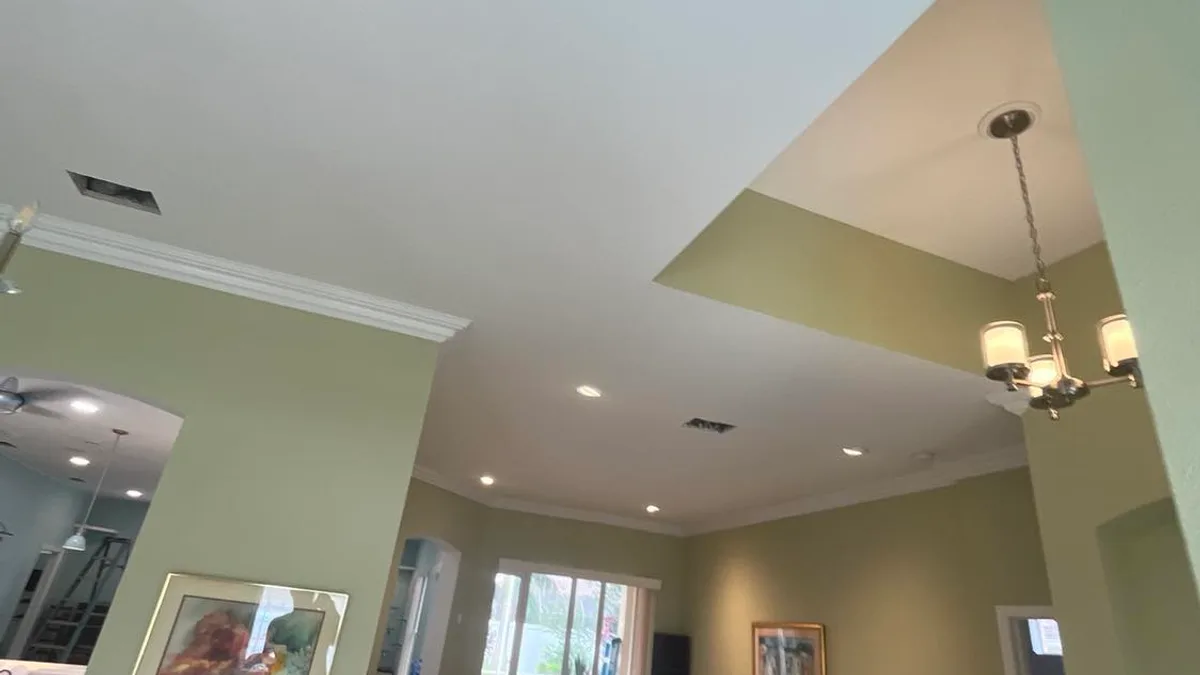
This worksheet helps property managers document physical condition and agree on painting scope. It does not determine tenant responsibility, normal wear, deposit deductions or legal obligations. Keep those decisions in the appropriate lease and legal process, separate from the contractor's description of the work.
Walk the property before choosing the remedy
Use one consistent room list and identify surfaces separately: walls, ceilings, doors and trim. Photograph the overall room and specific concerns. Record marks, repaired areas, coating damage, odor concerns and signs that another trade may need to investigate.
Do not turn a photograph into a diagnosis. A stain can be recorded without assuming its cause. A moisture concern should be resolved before it is treated as a color problem. EPA guidance emphasizes controlling moisture rather than treating the visible surface alone. EPA mold and moisture guidance.
Choose the finish boundary deliberately
| Proposed approach | What needs confirming | Main uncertainty |
|---|---|---|
| Clean only | Coating condition and approved cleaning method | Whether the mark can be removed without changing appearance |
| Local touch-up | Product, color, sheen, texture and trial result | Whether the repair blends acceptably |
| Repaint one wall | Natural boundaries and adjacent-wall expectations | How the renewed wall compares with neighboring surfaces |
| Repaint room | Included surfaces, repairs and product system | What is excluded and when the space is ready for use |
These are scope options, not automatic prescriptions. Benjamin Moore cautions that touch-ups may remain visible and identifies color, sheen and texture as matching considerations. A full-wall repaint can be an alternative when a localized result is not acceptable. Manufacturer touch-up guidance.
Record one decision per room
For each room, save the observed condition, proposed treatment, repair responsibility, finish boundary, product identification, approval and target handover date. Include whether cleaning or patching is handled before the painter arrives.
For example, an illustrative bedroom may have minor removable marks while a hallway has several repaired areas and no reliable paint record. They do not necessarily need the same scope. A small test and an agreed appearance standard can be more useful than choosing one treatment for the entire property by habit.
Coordinate the turnover order
Identify remaining plumbing, electrical, flooring and moving work that could affect the finish. Ask which repairs need to finish before painting and how completed surfaces will be protected afterward. A tight schedule does not remove the selected coating's readiness and care requirements.
Keep the occupancy date separate from the date the final coat is applied. Obtain product-specific guidance for ventilation, normal use, cleaning and placing objects against surfaces. Do not promise a universal overnight turnaround for every product and room condition.
Close with evidence, not just “done”
Walk the same room list at completion. Mark agreed work complete, photograph the final condition and retain any exclusions or follow-up items. Save the actual paint labels for the next turnover so the next decision starts with useful information.
When arranging Mendola Painting services, share the room schedule and turnover constraints. A clear scope helps the property manager buy the result intended while giving the painter a fair, specific description of the work.